
Sustainability shines at Lab Innovations 2023
14th December 2023 - Last modified 3rd January 2024
By Peter Cussell PhD, Science Writer
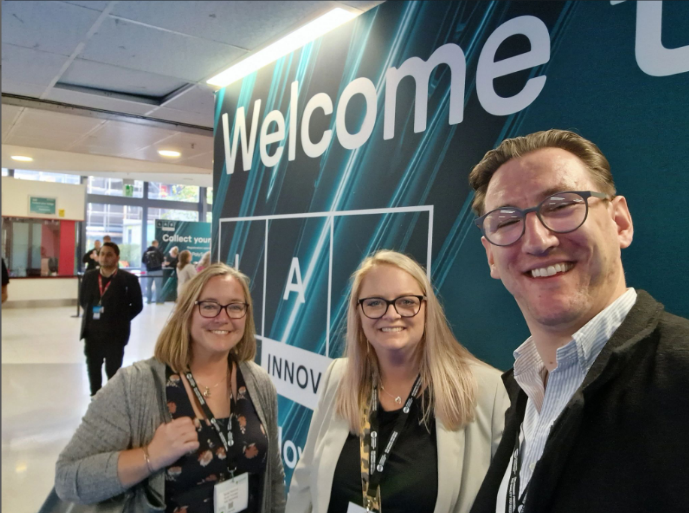
Following on from our last blog about Lab Innovations, this time we hear from Pete about his experience at the show and the key takeaways on lab sustainability.
Last month, some the Alto team attended Lab Innovations 2023, a trade exhibition representing the whole laboratory industry, hosted in Birmingham. It was fantastic to catch up with old friends and industry contacts, and to meet new people who share our passion for cutting-edge science.
There was a vast selection of stands to browse, exhibiting the latest tech and innovations, plus a wealth of interesting talks across various venues at the event. My colleagues and I came away from this year’s show feeling particularly inspired by the number of delegates championing lab sustainability.
Our industry has long grappled with the environmental consequences of scientific operations, and the disproportionate contribution that science makes to the global carbon footprint. For many labs, daily operations rely upon energy-intensive equipment, resource-intensive experiments and single-use plastics. The gargantuan scale of energy use and waste generation contributes to the science industry having an extraordinary environmental impact.
As scientists, we try to make sense of the world around us. As such, many of us feel a deep sense of responsibility to lead the way when it comes to adopting greener practices. It was heartening then, to see so many industry representatives at Lab Innovations pioneering and championing new innovations and ideas for greening the lab.
In this blog, we will look at some of the green solutions featured at this year’s show, and shine a spotlight on how the industry is rising to the challenge of making science more sustainable.
Promoting best practices in laboratory cold storage management
Cold storage is a critical aspect of lab operations, with samples and reagents requiring specific temperature conditions for preservation. But it’s one of the biggest areas of energy consumption – Did you know, a single ultra-low temperature (ULT) freezer can consume as much energy as a typical home?
Andy Evans, Director of Green Light Laboratories, was a leading voice for sustainability at Lab Innovations 2023. Andy advises Russell Group Universities on lab sustainability, and is particularly interested in the energy performance of lab equipment and the impact of daily practices on running costs and carbon emissions.

Giving informative talks and running hands-on sessions in the show’s sustainable lab; a space set-up to demonstrate common sustainability mishaps and best practices, Andy shared his wealth of knowledge on lab cold storage. He explained how small changes to fridge/freezer management can make a big difference in energy and resource consumption. Some of Andy’s top tips included:
Position the freezer properly – Make sure that cold storage units are installed in a well-ventilated area away from sources of heat and direct sunlight. Improper positioning can lead to higher energy consumption.
Reduce time spent using fridges/freezers – A significant energy saving can be made by minimising the time spent using cold storage units as much as possible. This can be achieved by organizing contents properly, labelling samples clearly and keeping an up-to-date inventory list.
Practice good space management – Optimise the use of space inside cold storage units by making sure that items don’t block grills/vents, or obstruct airflow that could impact temperature control. Also, avoid leaving large empty spaces inside the freezer, as this can consume significantly more energy.
Clean, defrost and maintenance checks – Freezers should be regularly defrosted and de-iced, and filters cleaned. Lab managers should implement regular maintenance checks to make sure the freezers keep functioning properly.
Remember, not all fridges are made equal – Take care when procuring a new fridge or freezer for your lab. Make sure to check the energy performance certification, and select the most energy efficient models possible.
Paving the way towards sustainable lab plastics
Another major sustainability challenge for our industry to overcome, is the reliance upon single-use, crude oil-based plastic consumables. From petri dishes to pipettes and pipette tips, sample tubes and flasks, scientists use and discard some 5.5 million tons of plastic waste per year [1]!
One effective strategy to reduce the carbon footprint of laboratories is the adoption of recycled plastics. By utilizing materials from recycled sources, labs can diminish their reliance on so-called virgin plastics, which require a substantial amount of energy for production. Recycled plastics not only help in waste reduction but also contribute to the circular economy, lessening the burden on natural resources.
One of our clients, Eppendorf had a stand at this year’s Lab Innovations, and were showcasing their new BioBased lab plastics range. Eppendorf has recently collaborated with Finnish company Neste, to produce a new range of high-quality plastic consumables made from renewable raw materials, like used cooking oil. The new BioBased product range comprises tubes and pipette tips made from 90% renewable sources.
This is a significant step forward for Eppendorf, who, through developing this new product line, are providing scientists with a practical alternative to crude oil-based plastics, with renewable plastics that meet the high-performance specifications required for lab research. Looking to the future, Eppendorf and Neste are working towards making the BioBased range from 100% renewable sources, and developing strategies towards reusing/recycling plastic lab consumables.
Hopefully, efforts like this will pave the way towards renewable lab plastics being adopted at a large scale in the life science and healthcare sectors. This would be a tangible move towards a more environmentally conscious approach to lab research.
A greener future ahead
As the scientific community continues to push the boundaries of knowledge, it’s important to acknowledge and address the impact of laboratory operations on the environment. Coming away from Lab Innovations 2023, I was left with the sense that the community is certainly rising to the challenge of making science more sustainable.
Through the adoption of sustainable practices like recycled plastics and optimising cold storage, laboratories can contribute to a greener future without compromising the pursuit of scientific excellence. By embracing these solutions and fostering a culture of environmental responsibility, we can all can lead the way towards a more sustainable future, and make sure that the wonder of science is preserved for generations to come.
References
1.Urbina, M., Watts, A. & Reardon, E. Labs should cut plastic waste too. Nature 528, 479 (2015)
